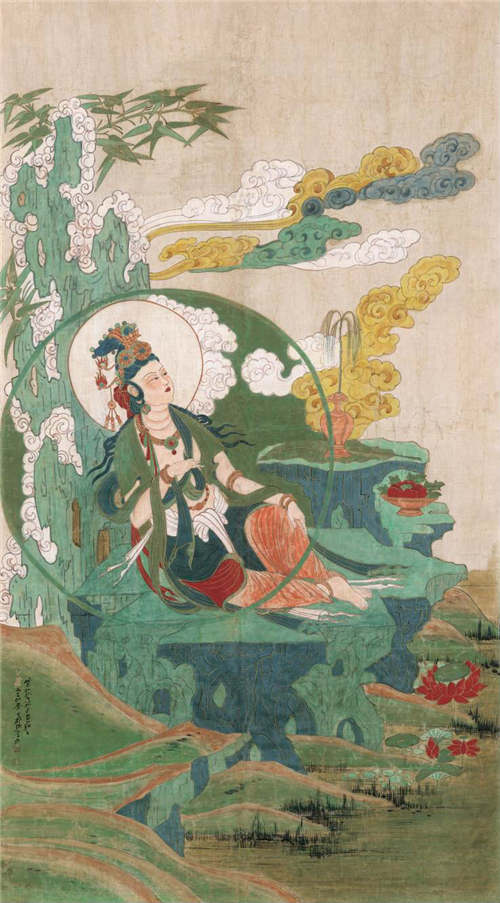
Zhang Daqian
Introduction
Zhang Daqian (1899–1983), hailed as one of the most accomplished and influential artists of the 20th century, is celebrated for his vast contributions to Chinese art. Born in Sichuan, China, Zhang's work encompasses a wide range of styles and techniques that have had a profound impact on both Eastern and Western art worlds. His legacy is evident in the continued admiration and study of his paintings and calligraphic works, which are revered for their beauty and innovation. Known for his mastery in traditional Chinese painting as well as his pioneering explorations into more abstract forms, Zhang's oeuvre reflects a deep respect for ancient art alongside a bold embrace of modern artistic currents.
Early Life
Zhang Daqian was born in 1899 in the Sichuan province of China, an area known for its rich cultural heritage. Growing up in a culturally vibrant environment, he was introduced to art at an early age through his family, which nurtured his burgeoning talent. His early education in classical Chinese art laid a solid foundation for his future innovations. Zhang’s early life was marked by a deep engagement with traditional Chinese painting techniques, which he later infused with his unique vision. Together with his brother Zhang Shanzi, Zhang co-founded the Da Feng Tang art studio in Shanghai during the 1920s, a vital space where he honed his skills and mentored a new generation of artists.
Artistic Development
Zhang Daqian’s artistic journey was characterized by both a reverence for tradition and a pioneering spirit of experimentation. He devoted considerable time to studying the works of ancient masters, particularly those of the 10th-century painter Dong Yuan, whose influence is evident in Zhang’s elegant landscape compositions. During a transformative period spent in Dunhuang, Gansu province, Zhang meticulously copied the ancient murals, which significantly impacted his style. This three-year sojourn not only deepened his understanding of Chinese classical art but also propelled him towards bold stylistic innovations. His later years witnessed a shift towards abstract expression in his work, as he experimented with "po cai," or splashing colors, a technique that brought a new dimension to Chinese painting.
Major Works
Paintings
Zhang Daqian’s body of work is extensive and diverse, with pieces that span traditional and modern styles. His emulations of Dunhuang murals are renowned for their fidelity to the original masterpieces, showcasing his technical skill and deep respect for history. Notable works include Landscape of Cloudy Mountain, a painting that exemplifies his mastery in mountain-and-water techniques and marks his exploration into abstraction through the splashing ink technique. Other significant paintings such as Riverside View of Splendor and Mist at Dawn highlight his skillful blending of classical Chinese and modern abstract styles.
Calligraphy
In addition to his paintings, Zhang Daqian was also an accomplished calligrapher. His calligraphic works reflect the same blend of tradition and innovation that defined his painterly oeuvre. Zhang’s calligraphy is noted for its expressive line work and dynamic compositions, which capture the essence of classical Chinese scripts while imbuing them with a modern sensibility. His calligraphic pieces often accompany his paintings, creating a harmonious balance between text and image that enhances the overall aesthetic impact.
Style and Techniques
Zhang Daqian’s style is marked by a remarkable versatility that spans traditional Chinese painting techniques and innovative modern approaches. His early works are characterized by meticulous brushwork and adherence to classical forms, influenced by his study of ancient masters. As his style evolved, Zhang began to incorporate more abstract elements, particularly through the use of "po cai," where he splashed ink and colors onto paper to create vibrant, expressive compositions. This technique, developed partially due to his deteriorating eyesight, allowed Zhang to explore new dimensions in his art, merging the philosophical depth of traditional Chinese painting with the bold expressiveness of modern abstraction.
Influence and Legacy
Zhang Daqian’s impact on the art world is profound and enduring. He is often credited with bridging Eastern and Western art traditions, introducing elements of modern abstraction into Chinese painting while preserving its classical spirit. His exploration of abstract forms and techniques like "po cai" paved the way for future generations of artists to explore new creative avenues. Zhang’s influence extends beyond his paintings; as a teacher and mentor, he nurtured numerous artists who went on to become significant figures in Chinese art. His legacy is preserved in numerous exhibitions and collections worldwide, continuing to inspire and captivate art enthusiasts and scholars alike.








